

How easily we learn to follow the wrong story
We watched Edward Scissorhands last night. My children saw a familiar film: snow falling, pastel houses glowing, a fairy tale about someone different finding love. I saw something else. I saw a parable about how easily communities are persuaded, and how fragile kindness becomes once a new story takes hold.
The film is not really about Edward’s difference. It is about the neighborhood’s response to it. And in that response, we see something uncomfortable about how welcome works, how quickly admiration turns to fear, and how readily people move together from care to cruelty without ever deciding to do so.
This is not a story about monsters.
It is a story about crowds.
Kindness With Conditions
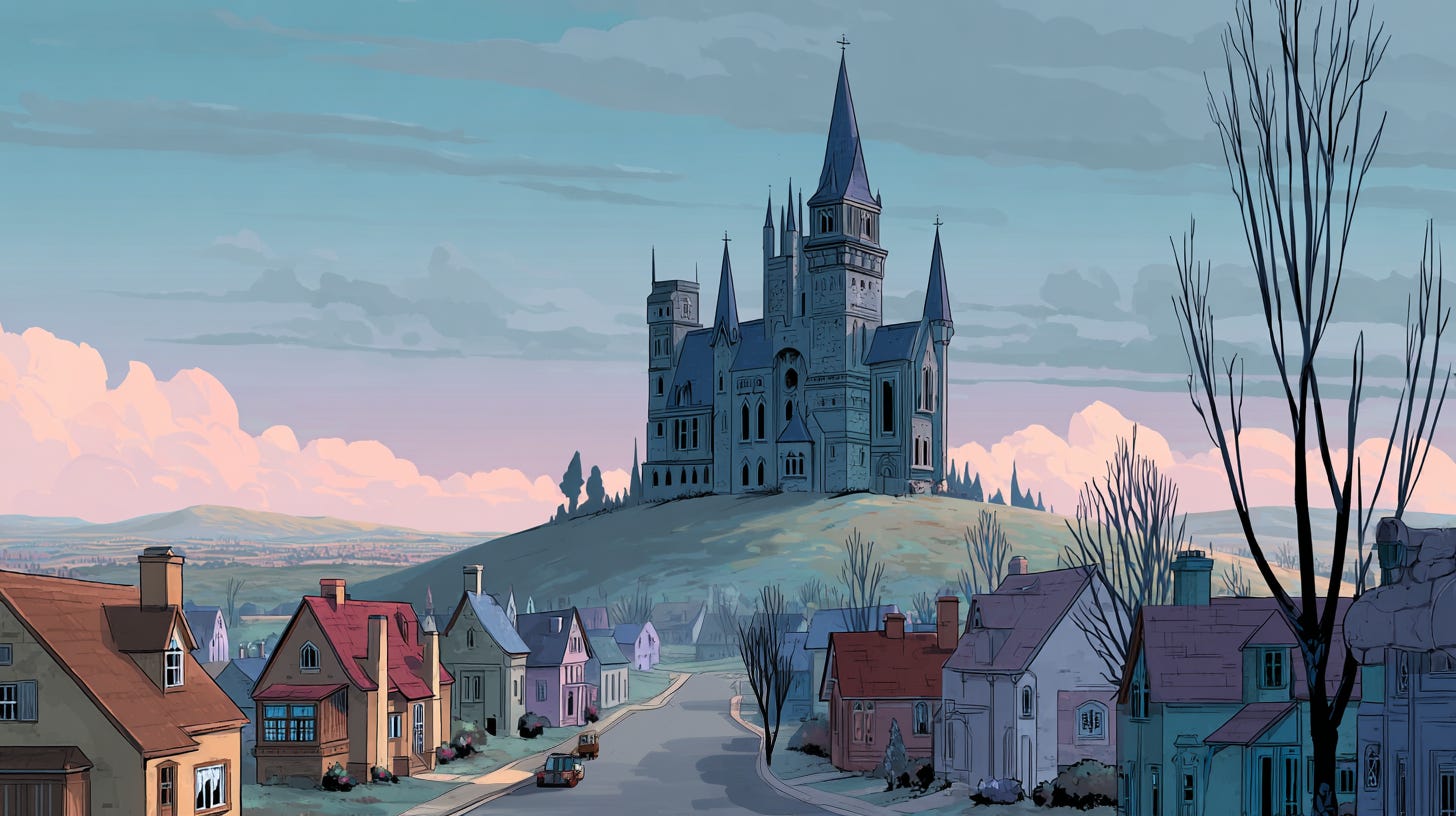
The neighborhood Edward enters is a study in suburban order. Identical houses. Manicured lawns. Politeness as social currency. Everything in its place, everyone performing a role.
When Edward first arrives, the neighborhood does not reject him. It celebrates him. He trims hedges into art. He cuts hair into beauty. He makes the ordinary extraordinary, and the neighbors respond with delight.
But notice what drives their welcome. Edward is embraced not because of who he is, but because of what he can do. His difference is tolerated as long as it is entertaining and useful. The moment his presence becomes inconvenient, the moment his difference threatens rather than decorates, admiration dissolves.
No one appears to decide this alone. The neighborhood moves as one, pivoting not because new truth has emerged, but because a new story has.
This is conditional virtue. It looks like kindness until tested. The neighbors do not ask whether Edward is good or dangerous. They ask whether he still belongs. When the answer changes, so does their judgment.
Who do we welcome only while it is popular to do so.
Hospitality Without Interrogation
Edward is discovered alone in a decaying mansion by Peg, an Avon saleswoman. When she first encounters him, she sees what others will later fear. Blades where hands should be. Scars. A body unfinished.
She does not interrogate him. She does not demand explanations. She does not calculate risk.
She simply decides that someone so alone should not remain that way.
Peg invites Edward into her car, into her home, into her family. When he nearly injures her by accident, she accepts the blame herself. When others stare, she corrects them gently. When her son gawks, she reminds him that staring is impolite. She does not deny the danger. She refuses to let it be the first or final word.
This is hospitality in its most radical form. Welcome that precedes understanding. Love that does not wait for credentials.
The Christian tradition has a name for this. Welcoming the stranger. Not the vetted stranger. Not the safe stranger. Just the stranger.
Peg’s kindness stands out precisely because it does not follow the neighborhood’s cues. She acts before consensus forms, and she remains steady even when the crowd begins to turn.
Learning to See Through Proximity
Kim, Peg’s daughter, is repulsed by Edward at first. She is embarrassed. She laughs at him. She wants him kept at a distance. His presence disrupts her sense of normal.
But proximity changes her.
Kim does not come to understand Edward through argument or explanation. She comes to understand him by being near him. By watching his restraint. By seeing his gentleness even when provoked. By noticing how, even when humiliated or misunderstood, he steps back rather than strike back.
Her transformation is not dramatic. It is gradual. Born of shared space and unguarded moments. It turns when she sees him alone, carving ice into something delicate and precise, absorbed in an act of care rather than performance, unaware of who is watching as snow begins to fall.
She stops seeing Edward as a problem to manage and begins seeing him as a person to know.
Still, Kim hesitates. She senses the truth before she is ready to stand apart from the crowd. She follows the prevailing mood longer than she should, not because she believes it, but because leaving the group carries its own risk.
How many of our judgments would survive genuine proximity.
When the Story Turns
The neighborhood’s turn against Edward does not happen all at once. It happens through whispers. Through rumors. Through fear repeated until it feels like fact.
Edward himself does not change. His hands are the same. His gentleness remains. What changes is the story told about him.
Once that story takes hold, resistance disappears. Fear does not need to convince everyone. It only needs to convince enough.
This is how societies drift into wrongdoing. Not through conviction, but through imitation. People follow not because they are cruel, but because cruelty has become the prevailing direction.
The vulnerable are always the first to feel that turn.
Fear That Protects Itself
Jim, Kim’s boyfriend, embodies this fear most clearly. His hostility toward Edward predates any injury. It is not born from harm, but from threat. Edward’s presence destabilizes a hierarchy Jim assumes is his by right.
Edward loves Kim without possession. Without entitlement. Without demand. And this exposes something hollow in Jim’s claim. So fear hardens into cruelty. Manipulation escalates into violence. The neighborhood follows his lead not because his story is true, but because it gives their unease a voice.
Power rarely needs proof. It only needs agreement.
Mercy That Refuses to Follow
In the final chase, the crowd demands completion. Edward must be caught. The story must end the way fear requires.
A police officer arrives with the authority to finish it. Instead, he looks. He sees. And he fires his gun into the air, letting Edward escape.
“Run,” he whispers. “Get out of here.”
The film does not explain his choice. It simply shows someone refusing to follow where everyone else is headed.
Mercy, here, does not undo the harm. But it breaks the momentum. It interrupts the lie by declining to participate in it.
Sometimes moral courage looks like nothing more than stopping.
What Remains
The neighborhood returns to normal. Lawns are trimmed. Houses glow again. Gossip fades. Life continues as if Edward never existed.
Edward is alone once more, creating beauty in isolation. Snow falls because of him, a gift the neighborhood receives without acknowledgment, without gratitude, without ever asking where it comes from.
This is peace without reconciliation.
Order without justice.
Safety preserved by forgetting.
Kim alone carries the truth, preserving it privately rather than naming it publicly. The community, by following along, has been spared the discomfort of reckoning.
The Question Left to Us
Edward Scissorhands is not a warning about villains.
It is a warning about how easily we learn to follow.
Edward’s hands were dangerous, and he restrained them.
The neighborhood’s hands were ordinary, and they did not.
The question is not who is different.
The question is how quickly we move when the story changes.
Where have you seen a community’s story change faster than the facts?
And what makes it so hard to stop following once momentum begins?