

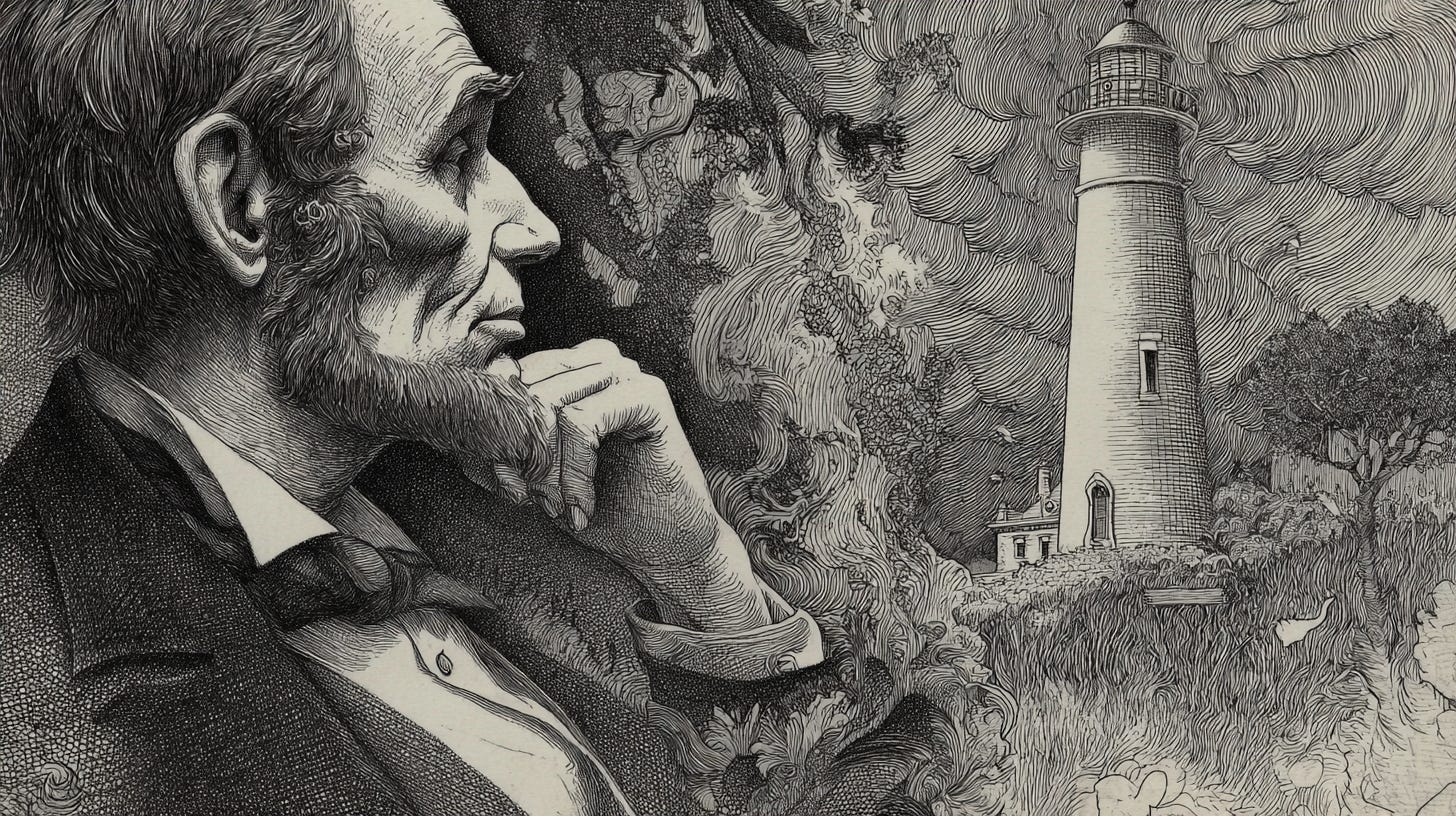
Legend attributes a simple, stubborn creed to Abraham Lincoln: “I am not bound to win, but I am bound to be true.”
Nothing was certain when Lincoln governed. The Union might not survive. Emancipation might not hold. His name might be remembered, if at all, with contempt. He had no assurance that what he was doing would work. What he had was clarity about what he could not do and still remain himself, and conviction about what he must do whatever the cost.
That sentence, whether spoken or distilled, is not inspiration. It is resistance. Resistance to the belief that moral action requires guaranteed outcomes. Resistance to the idea that conscience must wait until the future is visible.
Lincoln did not claim to see far. He claimed something smaller and more demanding: responsibility for what little he could see, and the courage to move toward it.
THE MISUNDERSTANDING
We tend to think direction requires certainty. That moral clarity means knowing how things will turn out. That conviction must feel confident.
This belief sits beneath much of our paralysis.
We wait to act until outcomes are assured. We delay judgment until consensus forms. We call this prudence, but often it is just fear. While we wait, time does not pause. Decisions are made around us. Silence becomes its own answer.
History is not shaped by people who knew how things would end. It is shaped by people who held to conscience and conviction while not knowing the final outcome. The difference is subtle but decisive.
Direction is not the same thing as destination. It is not a map. It is a bearing.
Direction is not the same thing as destination. It is not a map. It is a bearing.
CONSCIENCE AND CONVICTION
We often speak of conscience and conviction as if they were the same thing. They are not. They are two lights, and we need both to navigate.
Conscience is the lighthouse. It warns us away from the rocks. It tells us what we cannot do without becoming someone we refuse to be. Its beam is narrow but unambiguous: not there. Conscience does not show us the whole sea. It shows us where the sea will kill us.
Conviction is Polaris, the North Star. It does not warn. It summons. It tells us what we are sailing toward even when the journey is long and the outcome uncertain. Conviction is not confidence about arrival. It is commitment to direction.
Direction requires both: the constraint that keeps us from ruin, and the summons that pulls us toward what is true.
LINCOLN AT THE CENTER OF PRESSURE
We remember Lincoln as monument. The settled face carved into stone. The figure history has decided was right.
But the man himself lived without that verdict.
He governed a country tearing itself apart. He faced incompatible demands that could not be harmonized. Abolitionists accused him of cowardice. Border states accused him of betrayal. His own cabinet fractured around him. Every decision cost him support he could not afford to lose.
There were no clean options. No action without consequence. No assurance that the war would end in union rather than dissolution.
Lincoln did not possess certainty. He possessed conscience and conviction.
Conscience told him what he could not do. He could not abandon the Union. He could not retreat on emancipation once committed. He could not become the kind of man who traded principle for peace. These were the rocks.
But conviction told him where he must go. The Emancipation Proclamation was not merely the path left after others closed. It was a summons he walked toward with open eyes, knowing it might destroy him. He did not issue it because it was safe. He issued it because it was right, and because his sense of what the nation must become would not let him rest.
He once wrote, “I claim not to have controlled events, but confess plainly that events have controlled me.” This was not passivity. It was humility about outcomes paired with resolve about direction. He could not control the sea. He could keep his hand on the wheel.
MORAL DIRECTION
Moral direction is not seeing far. It is refusing to move against what you can see, and having the courage to move toward what you must.
Conscience closes paths. Conviction opens them. Conscience says you cannot go there and remain whole. Conviction says you must go here whatever it costs. The first restrains. The second summons. Both are necessary.
Conscience closes paths. Conviction opens them.
There is a kind of moral action that heeds neither light. It moves when the crowd moves. It speaks when speaking is safe. It measures direction by consensus rather than conscience, by comfort rather than conviction.
This is not direction. It is drift.
DIRECTION WITHOUT VINDICATION
Direction means orientation toward something true regardless of whether that truth is rewarded. It means fidelity to conscience when conscience warns, and courage to follow conviction when conviction demands. It means accepting that being right does not guarantee being vindicated.
Lincoln did not know he would be vindicated. He suspected, more than once, that he might not be. But he held to what he could see: the rocks his conscience warned him away from, the star his conviction would not let him ignore. He moved within those lights because the alternative was to sail blind, or not to sail at all.
BEARING
Most of us will never face decisions at Lincoln’s scale. We will not hold nations together or sign documents that alter history. Our choices will be smaller and largely invisible.
Still, we face moments when clarity is partial and cost is real. When competing voices demand allegiance. When conscience warns and conviction calls. When the question is not what will work, but what we can live with and what we are willing to move toward.
Somewhere, the lighthouse still flashes its warning. Somewhere, Polaris still holds its place. These lights are yours. They are enough to set a bearing.
The rest is holding to that bearing.
When the way forward isn’t clear, what helps you keep your bearing?